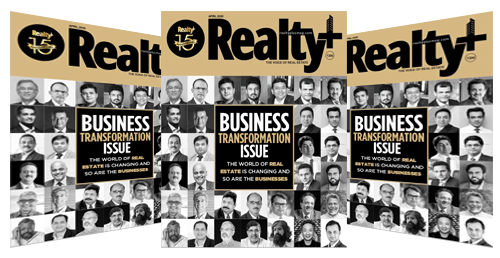




HOW GLAMOUR, LEGACY & ROI BUILD ICONIC BRANDS?
In Indian real estate, iconic brands are rarely born in advertising boardrooms. They are forged slowly on construction sites, shaped by delivery timelines, lived-in homes, and memories that last far longer than glossy brochures. As India’s property market moves deeper into premium and luxury territory, a fundamental question is being asked again: what truly builds an iconic real estate brand?
According to Neeraj Bansal, Partner and Head – India Global at KPMG in India, the answer lies in understanding how different real estate is from consumer businesses. “When we talk about iconic brands, we normally think of scale, visibility, and reputation,” he said. “But in real estate, the iconic brand is built quite differently. It is built slowly, project by project, through delivery, consistency, and trust with customers and stakeholders.” India, he noted, now ranks sixth globally in branded residential projects, contributing about four percent of global supply. “This was unheard of a few years ago,” Bansal said, pointing to the sharp momentum in premium and luxury housing across Indian cities. Yet, he underlined that branding in real estate demands sustained effort, not quick wins.
CONSISTENCY OVER CYCLES
Chintan Sheth, Chairman and Managing Director of Sheth Realty, traced how Mumbai’s real estate landscape has evolved over decades. “If you look at the market in ten or twelve-year cycles, the top-performing brands keep changing,” he said. “But the ones that endure over thirty or forty years are those who have consistently delivered the same quality across multiple cycles.” For Sheth, consistency is an umbrella that covers everything from design philosophy and execution capability to delivery credibility and post-possession service. “Today, what happens after delivery is as important as construction itself,” he said. This sustained performance, he added, allows trusted developers to command a premium not only from buyers, but also from landlords, financiers, and investors.
THE COST OF BROKEN PROMISES
Parthh K Mehta, CMD of Paradigm Realty, brought a sharper, ground-level perspective. “In Mumbai, you are known by your last project,” he said. “If you delay delivery or miss on promised quality, people don’t forget.” Mehta argued that in an age of social media, even small lapses can snowball into reputational damage. “It’s better to promise ten amenities and deliver them beautifully than promise twenty and fall short,” he said. For him, brand building today is less about chasing new customers and more about nurturing existing ones. “Word-of-mouth from a satisfied resident is far more powerful than expensive marketing.”
CERTAINTY, COMMUNICATION, AND MEMORY
Dr. Adv. Harshul Savla, D.Litt., Developer, Best Selling Author, World Record Holder, TEDx Speaker emphasised one word that cuts across the entire real estate value chain: certainty. “Whether it’s the homebuyer, banker, or landlord, everyone is looking for certainty,” he said. Alongside it, he stressed the importance of last-mile communication. “You might be doing everything right as a promoter, but if the message isn’t communicated properly on the ground, the brand suffers.” Ram Raheja, Managing Director of S Raheja Realty, reflected on real estate’s unusually long memory. “A building takes two to four years to complete,” he said. “Customers have a short memory because you are judged by your latest project, but they also have a very long memory. They never forget past experiences.” For Raheja, legacy is built through continuity. “As a third-generation developer, it’s a matter of pride when societies built by my grandfather come back to us decades later because of trust,” he said. “That trust comes from delivering what you commit.”
INNOVATION WITHOUT LOSING THE DNA
Manan Shah, Managing Director of MICL Group, cautioned against mistaking disruption for progress. “Build what your consumer wants, not what you like,” he said. Shah stressed creating products that work across generations, while preserving the brand’s core DNA. “If you disrupt the DNA that made you successful, that disruption becomes a failure.” He redefined luxury for urban India. “Today, luxury is t ime and convenience,” Shah said. “Reaching home early and spending time with family matters more than a grand lobby.” On branded residences, he was blunt. “A fashion or watch brand won’t add value unless it delivers real service and experience after possession.”
BRANDING, BUT WITH PURPOSE
Savla offered a balanced view on branded residences, calling them a strategic tool rather than a shortcut. “Globally, 80 percent of branded residences have hospitality partners. In India, 70 percent don’t,” he said. Hospitality-led branding, he explained, works because it extends into lived experience. “This segment is here to stay, but it must be used carefully and with the right partners.”
THE PREMIUMISATION IMPERATIVE
Sheth pointed to premiumisation as a structural shift rather than a passing phase. “India’s economic growth and global exposure mean the next generation will demand better products,” he said. Success, however, rests firmly on execution. “With every new project, developers must improve. That’s how brand premium is earned.”
SELLING A DREAM, NOT A FLOOR PLAN
In Indian real estate today, selling homes is no longer about brochures, carpet areas, or even luxury add-ons. It is about narratives. About understanding who the buyer is, what they aspire to, and how deeply a project can connect with their personal idea of home. The shift has been gradual, but unmistakable.
FROM APPRECIATION TO ASPIRATION
Siddharth Setia, President – Business Development, Project Design, Sales & Marketing at Peninsula Land, traces this evolution across three distinct phases. “Before 2013, real estate was largely a seller’s market,” he said. “The only story was simple: buy property, it will appreciate.” Delays were tolerated, even rewarded, because prices kept rising regardless. Post-2013 marked a turning point. Buyers became cautious, comparison-driven, and more demanding. Developers responded by highlighting amenities, features, and lifestyle positioning. “That was the phase where we started communicating benefits more actively,” Setia noted. Today, the industry has entered a third phase, one rooted in feedback loops. “The story now begins in the field, not the boardroom. Market research and customer insights feed directly into design.”
MAKING IT PERSONAL
For Kushal Ramesh, Co founder of Manasum Senior Living, the modern real estate dream is intensely personal. “Today’s dream is not generic,” he said. “It’s about how deeply you can understand an individual’s persona.” Homes, he argued, must be places people genuinely want to return to, spaces that reflect their emotional needs as much as functional ones. This personalisation extends across segments, from senior living to mid-income housing. The emphasis has shifted from selling structures to creating environments that feel intuitive and humane.
BEFORE BUYING LAND, KNOW THE BUYER
Nitin Nagpal, Chief Sales & Marketing Officer at Mayfair Housing, believes the biggest change begins even before land acquisition. “Gone are the days when developers bought land first and figured out the product later,” he said. Today, deep studies precede every decision, from apartment sizes to amenities and connectivity. “In Mumbai, customers are willing to compromise on apartment size if they can save half an hour of travel time,” Nagpal observed. Yet price remains unavoidable. “There will always be a customer who asks only one thing: what is my landing cost?” Selling the dream, he said, also requires giving buyers confidence about future infrastructure, neighbourhood growth, and price appreciation. “People want possession on time, promised amenities delivered, and value growth. All three matter.”
STORYTELLING IN THE AGE OF VISIBILITY
Deepak Sapru, Senior Vice President & Head – B2B2G Sales at GM Modular, framed real estate marketing as storytelling at scale. “Today, we’re selling a dream, not a floor plan. The developer is a storyteller,” he said. Drawing from consumer branding, Sapru stressed that “the product belongs to the company, but the brand belongs to the consumer.” Celebrity associations, he argued, accelerate visibility in a fragmented market. “A brand ambassador cuts across micro-markets instantly,” he said, citing GM Modular’s association with Sunil Shetty. In a digital-first economy, familiarity builds faster, but trust still takes time. Nagpal, however, offered a measured view. “Customers don’t usually pay a premium just because there’s a celebrity,” he said. “But visibility increases, and sometimes that nudge helps undecided buyers move forward.”
CHOOSING THE RIGHT FACE
Setia believes celebrity endorsements work only when aligned with brand values. “Every celebrity has a persona,” he said. “If that persona aligns with the story you want to tell, the message lands more intuitively.” Misalignment, he warned, dilutes credibility. Ramesh added that endorsement, at its core, mirrors personal trust. “A celebrity can do fifty to sixty percent of the job because people already associate traits with them,” he said. For senior living, he even suggested icons known for purposeful second innings, figures who embody longevity and active ageing.
DIFFERENTIATION BEYOND THE APARTMENT
As markets face oversupply, differentiation has moved beyond interiors. “If you don’t differentiate, you tend to die,” Sapru said bluntly. Smart homes and automation are now baseline expectations. The real distinction lies in what surrounds the home, shared spaces, amenities, and experiences that extend beyond four walls. Setia shared an example from affordable housing, where customers were asked to prioritise features as budgets shrank. “That’s how you identify real must haves,” he said. “The devil lies in the details.”
CONTENT THAT COMMANDS: WHAT TRULY BUILDS BRAND AUTHORITY TODAY?
I n an age flooded with visuals, virality, and constant noise, brand authority has become harder to earn and easier to lose. Nowhere is this more evident than in real estate, where trust is not a soft metric but the single biggest currency. Homes and offices are not impulse purchases; they are lifetime decisions. And in this high-stakes environment, content can no longer afford to be decorative. It must convince, reassure, and endure.
TRUST IS BUILT ON PROOF, NOT PROMISES
Shrutidhar Paliwal, Head Corporate Communications at M3M India, put it plainly. “Reputation is not built in one year, two years, or even five years,” he said. “In real estate, people will never trust you unless you have delivered. Any amount of promise still needs proof.” For Paliwal, transparency is not a campaign but a practice. From daily construction updates on YouTube to disclosing materials used deep within the structure, M3M’s approach focuses on the buyer’s right to know. “Reputation goes far beyond a logo or a glitzy advertisement,” he said. “It’s about reducing anxiety after possession, even down to helping families settle in so they can simply enjoy their home.” In real estate, he added, delivery is the ultimate benchmark of trust. “Out of a hundred small developers, ninety-five fall behind because they don’t deliver. Trust, in this industry, equals delivery.”
BUYER CIRCLES AND THE LONG MEMORY OF REAL ESTATE
Piyali Dasgupta, National Director – Corporate Marketing & PR at Knight Frank India, urged brands to step into the buyer’s shoes. “Ads don’t make people buy homes,” she said. “They only spark interest. Buyers listen to those they trust the most, family, friends, colleagues, their circle of influence.” Real estate decisions, she noted, are often once-in-a-lifetime choices. While leadership profiling, data, and visibility matter, they work only when anchored in ground reality. “There’s a difference between loud advertising and noise,” Dasgupta said. “Noise not backed by reality doesn’t work.” She also pointed to real estate’s unusually long reputation cycle. “After three years, the developer exits, but the building keeps carrying their name. That reputation stays long after the product changes hands.”
OFFICES, FLEXIBILITY, AND EXPERIENCE AS CONTENT
Shifting focus to commercial real estate, Megha Agarwal, CMO at Tablespace, reframed the conversation. “Your office is your second home,” she said. “People spend most of their waking hours there.” She traced the rise of f lexible workspaces to unmet consumer needs. “Clients couldn’t articulate the solution, only the pain,” she said. Flex spaces broke rigid, long-term models by offering adaptability, scale, and speed. Today, enterprises make up nearly 70 percent of flex demand. For Agarwal, branding in this space is lived daily. “Once a client enters our ecosystem, we don’t let go. From operations to the smallest preferences, like lactose-free coffee, experience becomes the brand narrative.” Marketing, she argued, now owns the entire journey, from prospect to loyal customer.
LOOKS FADE, RELATIONSHIPS DON’T
Amit Baid, Founder and Creative Director at A B See Brand Advisory, cut through the obsession with premium visuals. “Good-looking advertising is superficial,” he said. “A brand is a relationship.” Baid warned against confusing fame with importance. “You can be famous without being credible,” he said. “Numbers alone don’t build trust.” He likened branding to raising a child. “You give it values, tone, culture. The moment it behaves out of character, credibility breaks.” While he differed slightly on delivery being the sole trust-builder, Baid agreed it must be communicated meaningfully. “If you deliver but never talk about it, it’s like dancing in the jungle. No one sees you.”
VIRALITY VERSUS CREDIBILITY
Dr. Sarvesh Tiwari, Founder and Managing Director at PR Professionals, raised the question many brands wrestle with today: virality versus credibility. With content becoming faster, louder, and more exaggerated, he asked how brands can still earn trust. Dasgupta’s response was pragmatic. “What does viral even mean if it doesn’t convert into sales?” she asked. “Marketing’s success ultimately shows up in business outcomes.” Agarwal echoed the sentiment with a striking analogy. “It’s okay to be famous, and it’s okay to be credible, but brands must know which they want to be,” she said. “Problems arise when brands chase virality without staying true to who they are.”
HOW DIGITAL-FIRST BRANDS ARE REDEFINING REAL ESTATE
Real estate was never built for speed. It thrived on handshakes, site visits, and long conversations across dining tables. Word-of-mouth carried more weight than billboards, and trust travelled slowly but steadily. That rhythm is changing. Today, the first site visit often happens on a phone screen, and the first judgment is made before a call is placed. Instagram, once dismissed as a lifestyle indulgence, is now shaping how property brands are discovered, assessed, and remembered.
FROM REFERRALS TO REELS
“Real estate has been largely successful without disruption or digitisation,” said Aayush Puri, Head – ANAROCK Channel Partner & ANACITY Intl. “But that’s changing at an unprecedented pace.” He described new-age buyers as the “Spotify generation”, people who expect everything on demand. EMIs are compared online, Google reviews checked instinctively, and virtual site tours consumed before stepping out. “Today, a project isn’t launched unless it’s launched on Instagram,” he said, drawing a parallel with modern relationships needing to be “Instagram official” to feel real. This shift has turned Instagram into the first filter. Before sales teams speak, feeds speak. And that, many believe, is where the gaps begin.
THE REALITY GAP ON THE GRID
“When you open Instagram, you see sunlit corners and perfect work-from-home setups,” said Nishit Gururani, Brand Strategist and Co Founder, ONEDIGITAL. “But buyers actually want three things: price, location, and ROI.” He pointed to a growing disconnect between aspirational visuals and market reality. Amenities look abundant online, but delays and diluted delivery erode trust later. “If we start talking honestly about ROI and location, and use real user-generated content instead of polished fiction, a big problem gets solved,” he said. Jay Rathod, Founder and CEO, Koffeetech Communications, was blunter. “Most developer handles look like poster walls,” he said, referring to festive greetings, stock renders, and founder birthdays. “Instagram either makes or breaks the site visit.” For him, misalignment is fatal. “If the site experience doesn’t match what Instagram promises, that’s where trust collapses.” Consistency, he added, is non-negotiable in a category where people invest life savings.
NARRATIVE OVER FORMAT
For Palak Dani, Real Estate Expert, the medium matters less than the story. “Consumers don’t buy formats, they buy narratives,” she said. Instagram, VR, drones, testimonials, all of these are enhancers. “Formats change, narratives don’t.” A compelling narrative may attract attention early, but deeper tools like VR and testimonials build confidence when decisions turn serious. That thought was echoed by Akhil Saraf, Founder and CEO, Reloy, who warned against cookie-cutter digital advertising. “Once you browse one project, Instagram shows you ten identical ads,” he said. Cutting through that noise requires sharper positioning. “Narrative gets you the site visit. Product closes the deal.” In markets like Mumbai, he noted, buyers can instantly sense value mismatches, regardless of how glossy the story looks.
WHEN INSTAGRAM SELLS, NOT JUST SHOWS
At Pride World City, Instagram has moved beyond branding. “We don’t see it only as a branding tool. We see it as a sales engine,” said Sushant Kokate, Marketing and Strategy Head, Pride Group. Nearly 45 percent of their sales are direct, supported by a hybrid digital funnel. High-intent creators handle walkthroughs and investment logic, while lifestyle creators bring township experiences alive. “When content is relatable, performance marketing starts working,” he said, adding that live streams from busy sales offices often push hesitant buyers to act.
DESIGN, PERCEPTION, AND EXPECTATION
Design architect Hafsa Khan, Director at IM Buildcon, offered a cautionary note. “Social media has made everyone smart, sometimes too smart,” she said. AI-driven renders and flawless visuals shape expectations that take time to deliver. “You don’t always get what you see,” she said, reminding buyers that spaces must be experienced, not just scrolled through. While beauty attracts, trust depends on delivery.
BRANDING VERSUS SHORT-TERM GAINS
For Rushabh Shah, Chief Marketing Officer at Rustomjee, the tension between branding and performance is constant. “Sales-driven campaigns give short-term numbers but hurt the brand long-term,” he said. Discount-heavy strategies train buyers to wait. The real premium, he argued, comes from trust built over decades. “People pay 20 to 30 percent extra not for square footage, but for confidence.” That confidence, he said, is created through sustained branding, loyalty, and consistency across every digital touchpoint.
BRANDED RESIDENCES: WHERE LUXURY, WELLNESS & LIFESTYLE CONVERGE
Luxury housing in India is undergoing a quiet but decisive shift. Once defined by size, address, and marble finishes, luxury today is increasingly measured by experience, emotion, and everyday wellbeing. The rise of branded residences sits squarely at this intersection, reshaping how homes are designed, marketed, and lived in.
FROM STATUS TO SENSATION
“What does luxury really mean today?” asked Nazia Sharma, Director – Residential Services at Cushman & Wakefield. For decades, the answer lay in space and status. Now, buyers are asking a more intimate question: how does a home make them feel? “The conversation has moved from what a home looks like to how it’s experienced,” she said, explaining why branded residences, blending hospitality, wellness, and lifestyle, are gaining traction in India. Global collaborations with names like Ritz-Carlton, St. Regis, Four Seasons, Philippe Starck, and Elie Saab have accelerated this shift. But Sharma posed the real challenge: aligning global branding philosophies with Indian expectations, execution realities, and commercial logic.
REDEFINING LUXURY THROUGH WELLNESS
At Gulshan Dynasty in Noida, luxury took an unconventional turn. “Luxury is subjective,” said Yukti Nagpal, Visionary Leader and Director at Gulshan Group. “We moved beyond Italian marble and finishes to create a more functional way of living.” When Gulshan introduced wellness-led homes, the idea was initially met with scepticism. “People asked if we were building a spa,” she recalled. Five years on, residents value what once felt unfamiliar. “They value the sundecks, low-density living, farm-to-fork concepts, and open green spaces,” Nagpal said. “These were needs they didn’t even know they had.” Today’s luxury buyer, she believes, is less about defining luxury and more about embracing a better way of life when it’s thoughtfully offered.
A VISION BEFORE ITS TIME
Oberoi Realty’s Three Sixty West in Mumbai stands as one of India’s earliest experiments in branded living. Launched in 2014, it entered a market where branded residences were virtually unknown. “We wanted to build something customers couldn’t even imagine living in Mumbai,” said Sarina Menezes, Senior Vice President – Brand Marketing & Corporate Communication, Oberoi Realty. The decision to partner with Ritz-Carlton was deliberate. “The brand brought global credibility,” she said, while Oberoi retained its own identity by positioning the project as Three Sixty West, managed by the Ritz-Carlton. The result was a fully managed residential experience, shaped by hospitality expertise. Today’s buyers, Menezes noted, are globally exposed and wellness-driven. “They want sports, recreation, learning, and leisure at their doorstep,” she said. “When all of that comes together in one ecosystem, managed by hospitality professionals, it becomes a complete aspirational experience.”
DESIGNING EMOTION, NOT JUST SPACE
For architects, branded residences demand a delicate balance. “Brands come with strong identities, palettes, and rules,” said Tushar Mistry, Principal Architect at TMDS. “The challenge is adding a personalised Indian touch without diluting the brand.” Unlike hotels, homes are deeply emotional spaces. “You’re not managing funds or brands alone. You are managing emotion,” Mistry said. Designers, he explained, become part of a family’s long-term journey, navigating trust, culture, and lifestyle within strict brand frameworks.
SUSTAINABILITY AS A NON-NEGOTIABLE
Branded living also brings sustainability into focus. Nagpal sees it as a necessity, not a challenge. “If we are not mindful of the environmental impact of what we build, we are failing as city builders,” she said. Buyers, she added, are increasingly demanding energy efficiency and sustainable design. At Gulshan Dynasty, residents even chose to use surplus space to install large air purification systems, prioritising air quality over additional amenities.
FROM SQUARE FEET TO STORYTELLING
From a developer’s lens, branded residences shift the sales conversation. “It moves from price per square foot to value per lifestyle,” said Sumesh Mishra, Founder of Lighthouse Proptech. He traced the evolution from design-led brands like Versace to hospitality-driven names like Ritz Carlton, and now to wellness- and longevity-focused developments. Buyer expectations vary sharply. “Millionaires look for global hospitality standards,” Mishra said. “Billionaires look for security, health optimisation, mental wellbeing, and air quality.” In projects like Bandra Bay, storytelling around connectivity, green spaces, and infrastructure transformed perception and quadrupled walk-ins within months.
QUIET IS THE NEW LUXURY
As India emerges as one of the world’s top ten markets for branded residences, trust remains central. “This is the biggest cheque a customer will write,” Menezes said. “They want to give it to a credible brand.” Global hospitality players, she added, partner only with developers whose reputations match their own. The future, she believes, lies in restraint. “Luxury is becoming quieter,” she said. “Not bold, gold, or loud, but calm, considered, and deeply personal.” In a world of constant noise, branded residences promise something rare: a home that feels like a retreat, not a statement.
CRISIS, CONTROVERSY & COMEBACKS: MANAGING REPUTATION IN REAL ESTATE
Reputation in real estate is a slow build and a fast collapse. Years of delivery, trust, and credibility can unravel overnight, triggered by a construction defect, a governance lapse, an ESG allegation, or even a poorly handled communication misstep. In an industry where buyers commit decades of savings and emotions, crisis is no longer a question of if, but when. Setting the context, Arundhati Bakshi Dighe, Head – PR and Communication, India at JLL, captured the reality succinctly. “In today’s hyper connected world, a reputation built over many years can unravel very quickly. The real question is not whether your brand will face a crisis, but how you circumvent it and emerge stronger.”
THE WEIGHT OF TRUST IN HIGH-STAKES INVESTMENTS
Real estate crises cut deeper because of the nature of the product. “An average Indian family invests fourteen to twenty times its annual income into a home,” said Suhas Tadas, Senior Vice President – Corporate at Concept PR. “When what is promised and what is delivered don’t match, that gap itself becomes the crisis.” Tadas emphasised empathy as the starting point of any response. Brands that understand buyer sentiment, he noted, tend to respond better under pressure. “When clients trust us as advisors and allow honest communication, outcomes are invariably better. The media is also more receptive when they see sincerity and accountability,” he said, warning that defensive silence often invites hostile scrutiny and erodes public trust further.
REPUTATION IS BUILT BEFORE THE CRISIS HITS
For Hardik Desai, Senior Vice President at Adfactors PR, crisis management begins long before headlines appear. “What you do during a crisis is only ten percent. Ninety percent is your behaviour before it,” he said. Legacy brands, he explained, are perceived differently because credibility has already been banked. Desai cautioned against overreacting to every issue. “Not everything is a crisis. A wrong headline or a routine RERA notice is not the same as a reputational threat to brand existence.” The real problem, he added, is that many crises have already been mishandled on the ground weeks earlier and surface only after amplification on social media.
THE GOLDEN MINUTE AND THE COST OF DELAY
Time, according to Angela Minocha, Managing Partner at White Marque Solutions, is the most critical variable. “Time literally stands for money in a crisis,” she said. In a digital environment where news travels in seconds, agencies can no longer afford to be informed late. “If you’re the last person to know there’s a crisis, you’re already in trouble.” Minocha described modern crisis management as layered. Customers, communities, investors, and internal teams are impacted long before the press weighs in. “Giving the story last to the media is ineffective. Today, you f irst assess who the crisis is hitting and how it will impact business and reputation.” Desai echoed this shift, noting that the traditional “golden hour” has shrunk to a “golden minute, if not a golden second.”
HICCUPS, CRISES, AND THE IMPORTANCE OF CONTEXT
Distinguishing between a temporary hiccup and a genuine crisis remains one of the hardest calls. Desai offered a simple lens: “If it questions the very existence or credibility of your brand, it’s a crisis. If it’s a one-off operational issue, it’s a hiccup.” Tadas illustrated this with a telling example. A crime occurring within a township may cause momentary anxiety, but it does not question the developer’s product. Structural defects, however, strike at the heart of trust. “That’s when reputation takes a real hit,” he said.
LISTENING BEFORE THE NOISE GROWS
Early warning systems have become indispensable. With everyone acting as a publisher today, monitoring sentiment is no longer optional. Desai pointed to social listening tools and AI-driven analytics, but stressed that technology alone is not enough. “Human judgement matters because we’re dealing with emotions, not just data.” Tadas explained how tools help track virality, influence, and spread, while experience determines what deserves immediate attention. Minocha added a crucial caution. “Ignoring passive voices is dangerous. A post with ten followers can escalate quickly if it tags the right authority. Ignorance is not bliss in crisis management.”
OWNING UP AND LOOKING AHEAD
Across voices, one theme remained consistent: honesty and ownership. Anonymous statements and evasive language weaken credibility. “Someone must take responsibility,” Desai said. “Often, that needs to be the CEO.” As scrutiny around governance, ESG compliance, and delivery intensifies, crises in real estate are becoming more complex. Greenwashing allegations, overselling, leadership churn, and delayed returns are no longer peripheral issues but central reputation risks.
THE MAKING OF AN ICON: INSIDE THE SUCCESS STORY OF A BRAND
In Mumbai’s unforgiving real estate landscape, where ambition often overshoots affordability, Platinum Corp’s story did not begin with a grand vision of luxury towers or glossy brochures. It began with a quiet observation and a calculated risk. Until 2010, Vishal Ratanghayra and his partner Gurminder Singh were deeply entrenched in different aspects of real estate, but not as developers. The leap came in 2010–11, when they chose to start their own development business, guided by what Ratanghayra describes as a clear market gap. “Everyone was chasing luxury back then,” he recalls, “but the signs were very evident that the market was really looking at affordable and value-conscious housing.”
SEEING OPPORTUNITY WHERE OTHERS LOOKED AWAY
At the time, Mumbai’s housing conversation had become almost fatalistic. “There was this very standard line you would hear everywhere,” Ratanghayra says. “‘There is nothing available for a crore of rupees in Mumbai.’ We saw that as a huge opportunity.” Rather than dismissing the city’s affordability paradox, Platinum Corp embraced it. The idea was not to compromise on design or construction, but to rethink scale and efficiency. “We wanted to offer well constructed, well-designed, branded residences at about a crore of rupees, in good locations of Mumbai,” he says. The timing proved prescient. As the real estate sector went through one of its most challenging phases over the next five to six years, demand for value-conscious housing quietly gathered strength. Platinum Corp, aligned with that demand, found room to grow. “It turned out to be a huge blessing,” Ratanghayra notes, reflecting on the period when many developers struggled to stay afloat.
BUILDING WITHOUT A NAME
Growth, however, did not come without obstacles. The most fundamental challenge was invisibility. “Back then, we were not a brand. We were not known at all,” Ratanghayra admits. Recognition had to be earned the hard way. Visibility did not come from aggressive promotion. Instead, it came from delivery. “Just communication really doesn’t help,” he says. “Communication is just ten percent. Ninety percent has to be behaviour.” That behaviour was reflected in everyday decisions, from design choices to construction quality, and from t imelines to customer interaction. Over time, Platinum Corp moved from being “nobody” to a recognised name in Mumbai’s value-conscious real estate segment.
THE RISK OF BEING TYPECAST
Operating in this segment brought another concern: perception. Value-conscious housing was often conflated with affordable housing, a category many developers avoided for fear of being boxed in. “There was a risk of getting typecast as an affordable housing developer,” Ratanghayra explains. But customer feedback told a different story. The spectrum of value-conscious housing, he realised, was wide. “It can range from one crore to three crores or even four crores. It all depends on location and the product you’re offering,” he says. As projects were completed and families moved in, scepticism gave way to acceptance. Compact homes, thoughtfully designed and efficiently planned, proved not just livable but desirable. “You can offer value-conscious real estate which is compact in size, yet very nicely habitable and usable,” he says. Over time, the label ceased to be a limitation and became a strength.
CUSTOMER-CENTRICITY AS CULTURE
At the heart of Platinum Corp’s journey lies a principle Ratanghayra calls its “success mantra”: customer-centricity. This was not a slogan, but a culture deliberately drilled into every layer of the organisation. “Right from the top boss to the chief architect, chief engineer, construction staff, salespeople, even office boys and drivers,” he says, “everyone must understand what it means to be customer-centric and how to make people happy.” Brand-building, in this view, is not an objective but a by-product. “Once your organisation imbibes this culture, becoming a brand is just an outcome of the process you follow over a period of years,” he says.
MEASURING SUCCESS BEYOND SCALE
Today, Platinum Corp’s numbers are substantial: a team of 250 people, 1.75 million square feet completed, and over 1,500 homes delivered. Yet, Ratanghayra measures success differently. “Till date, we don’t have a single complaint in RERA against us. Not a single RERA complaint,” he says with quiet pride. For a first-generation entrepreneur in a sector known for entry barriers and disputes, this, he believes, is the true marker of credibility. “That is the true meaning of being a good brand, when you have happy customers across all levels.”
DEBUNKING THE BRANDING MYTH
If there is one misconception Ratanghayra is keen to dispel, it is the idea of overnight branding. “The biggest branding myth is that a real estate brand can be built instantly or through excessive communication,” he says. “Marketing on Instagram is fine, but a real estate brand cannot be built overnight.” Brands, he insists, are forged through years of consistent behaviour and hard work. In Mumbai’s crowded skyline, Platinum Corp’s rise stands as proof that icons are not always born in luxury. Sometimes, they are built patiently, one value-driven home at a time.
FOUNDERS AS BRANDS: THE NEW BLUEPRINT FOR BUILDING TRUST
In Indian real estate, trust has never been a soft value. It is the hardest currency in a sector long shaped by delays, opacity, and broken promises. Yet, quietly and steadily, a shift is underway. Brands today are no longer built only on glass façades, scale, or balance sheets. They are built around founders, their personal credibility, and the responsibility they choose to carry. At a recent industry conversation, three voices from very different corners of the business offered a clear message: in a high-risk, high-stakes sector, the founder’s name is often the brand’s strongest assurance.
WHEN A NAME BECOMES A PROMISE
Sandeep Kotak, Founder and Managing Partner at Mango Advisors, knows this tension intimately. Having been part of the team that shaped Kotak Mahindra’s transition from a f inance company into a bank in 2003, he recalls how internal assumptions clashed with external reality. “We believed we were innovative,” Kotak said. “But consumer research showed something else. People trusted us more than they thought we were innovative.” That insight changed everything. The decision to place the Kotak family name on the bank was not taken lightly. “When a promoter puts a family name on the brand, they add credibility,” he said. “But they also take on a huge amount of responsibility.” Years later, when Kotak set up Mango Advisors, the naming debate returned. The eventual choice was deliberate and research-backed. “Globally, fruit brands have done very well,” he said with a smile. “Apple, Orange, Blackberry, Mango. In India, mango connects instantly. It reminds people of childhood. When someone sees the name, they smile.” Branding, he argued, only works when it is lived daily, especially as organisations scale from thousands to tens of thousands of people. “The hardest part is not designing the logo. It’s ensuring the brand shows up in behaviour.”
CARRYING THE WEIGHT OF LEGACY
For Sanjay Dutt, MD and CEO of Tata Realty & Infrastructure, the stakes are even higher. At Tata, the brand arrives before the individual. “When you introduce ‘Tata’ into any statement, expectations change immediately,” he said. Dutt rejects the usual phrase “customer-centric”. “At Tata, we say we are customer-obsessed,” he explained. “And our customers are not just buyers. They are employees, vendors, partners, and even the government.” Trust, transparency, governance, and ethics are non negotiable. Dutt shared an early decision after joining Tata Realty in 2018, when the company was sitting on unsold inventory worth Rs 6,000 crore. Instead of holding out, Tata offered discounted homes to army personnel through the Army Welfare Housing Organisation. “We took a loss,” he said. “But we delivered on what the Tata brand stands for.” That philosophy extends to design and long-term thinking. Tata Housing has invested in green buildings for over two decades, long before incentives existed. In one Bengaluru project, the company built a fully equipped medical clinic inside a residential complex. “We saved four lives in three years,” Dutt said. “That’s the point. How do we care for people?”
BUILDING FOR 70 YEARS, NOT SEVEN
Pradeep Kumar Aggarwal, Founder and Chairman of Signature Global, brings a promoter’s clarity. Before entering real estate, he spent over two decades in capital markets, where governance determines survival. “When we started Signature Global, the thought was simple,” he said. “We are not here just to take money and hand over a product. We are borrowing the customer’s trust for three to four years.” A conversation with an IFC official stayed with him. “He asked me, do you want to build a brand for seven years or 70 years?” Aggarwal recalled. “If it’s 70, you have to put everything at stake.” That mindset has shaped Signature Global’s rise in Delhi NCR’s affordable and mid-income housing segments. Aggarwal points to data as proof. In 2017, branded developers held just 17 percent of the market. Today, that share is around 40 percent. “In the next ten years, it will cross 65 percent,” he said. “Customers are more aware. RERA, social media, transparency, everything keeps you accountable.” For Aggarwal, competition fades when value delivery exceeds expectations. “If someone takes Rs. 100 and delivers Rs 110 worth of value, competition disappears,” he said. “That’s where branding actually begins.”